The complete blood count (CBC) is the most-ordered blood test in primary care. Most articles about it walk through each marker individually: hemoglobin here, MCV there, WBC over there, RDW separately. That's a fine reference structure but it misses what hematologists actually do, which is read the markers as joint patterns.
MCV and WBC are the most diagnostically informative pair. They cover red-cell health and white-cell function respectively, and the joint pattern resolves diagnoses that either marker alone leaves ambiguous.
The reference picture
Two-axis matrix:
- MCV (mean corpuscular volume): reference range 80-100 fL. Below 80 = microcytic. Above 100 = macrocytic.
- WBC (white blood cell count): reference range 4.0-11.0 K/uL. Below 4.0 = leukopenia. Above 11.0 = leukocytosis.
The four quadrants of out-of-range patterns are where the joint signal lives.
Quadrant 1: high MCV + low WBC

The cleanest pattern. High MCV with low WBC almost always reflects impaired DNA synthesis at the bone-marrow level. The two most common causes:
Vitamin B12 deficiency. B12 is a cofactor for DNA synthesis. Deficiency produces large red blood cells (macrocytic anemia) and reduced white blood cell production. Common in older adults via reduced intrinsic factor, in vegans without supplementation, in chronic metformin users, and in people with autoimmune gastritis. Serum B12 below 200 pg/mL is the conventional cutoff; functional deficiency at 200-400 pg/mL is also clinically relevant when symptoms are present.
Folate deficiency. Same mechanism as B12. Less common in fortified-grain populations but present in alcohol-dependent populations, pregnant women without supplementation, and methotrexate users (which is a folate antagonist). Serum folate under 4 ng/mL is the conventional cutoff.
The MCV signal is robust: Yoon 2016 (Korean general-population cohort) found MCV above 96 fL predicted all-cause mortality even within reference range, after adjusting for hemoglobin ( Yoon et al. 2015 ). Solak 2014 found similar in a chronic kidney disease cohort ( Solak et al. 2014 ). The combined picture (MCV high + WBC low) sharpens the diagnostic by pointing at marrow-level DNA synthesis as the mechanism.
The clinical follow-up: serum B12, serum folate, methylmalonic acid (sensitive B12 marker), homocysteine. If both are normal, look at thyroid (hypothyroidism produces a milder macrocytic picture) and at alcohol use.
Quadrant 2: low MCV + high WBC
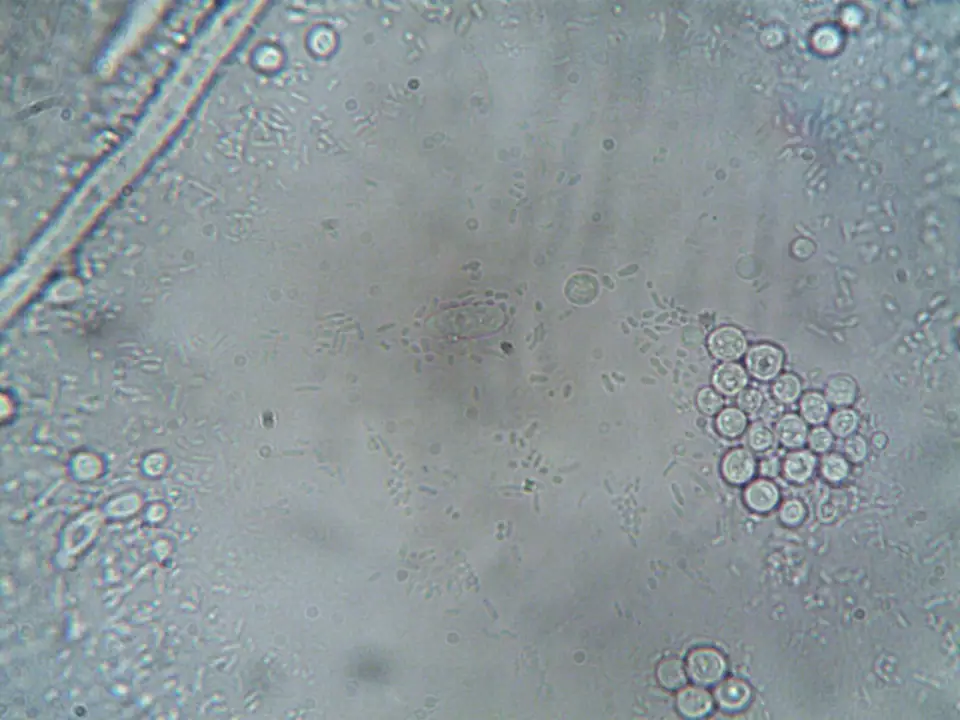
The iron-deficiency-plus-inflammation pattern. Microcytic red cells point at iron deficiency or thalassemia. Elevated WBC points at infection, chronic inflammation, or stress response.
In primary-care populations, the most common combination is:
- Iron deficiency anemia from chronic blood loss (GI bleed, menstrual loss) plus bacterial infection or post-viral inflammation.
- Chronic inflammatory disease (rheumatoid arthritis, IBD) producing both the microcytic anemia of chronic disease and the elevated WBC.
The Ruggiero 2007 + Erlinger 2004 + Shah 2017 cohort work consistently shows WBC elevation at the upper end of reference range predicts cardiovascular and cancer mortality ( Ruggiero et al. 2007, n=2803 Erlinger et al. 2004, n=22887 Shah et al. 2017 ). The combined low-MCV + high-WBC picture warrants ferritin, transferrin saturation, and a clinical history for chronic inflammatory drivers.
Iron studies (ferritin <30 ng/mL is classic deficiency; <100 ng/mL with chronic inflammation is functional deficiency) plus inflammatory markers (CRP, ESR) plus a basic GI workup (occult blood, age-appropriate colonoscopy) is the standard cascade.
Quadrant 3: high MCV + high WBC
The least common pattern, and almost always warrants clinical follow-up. The differential includes:
Liver disease and alcohol use. Alcohol independently elevates MCV (alcohol-related macrocytosis) and can elevate WBC via inflammation. The pattern is common in advanced alcoholic liver disease.
Myelodysplastic syndrome (MDS). A pre-leukemic bone-marrow disorder more common in older adults. Macrocytic red cells plus dysplastic white-cell production. The combined picture in an older adult without obvious alcohol or B12 etiology warrants hematology referral and bone-marrow workup.
Hypothyroidism with infection. Hypothyroidism produces mild macrocytosis; concurrent infection can elevate WBC. Less common but easier to rule out (TSH, free T4).
Pregnancy with infection. Pregnancy can mildly elevate MCV; concurrent infection elevates WBC. Context-specific.
This quadrant has the highest density of "needs clinical workup" interpretation. The longevity-optimization framing should not be the lens here; the appropriate response is clinical evaluation.
Quadrant 4: low MCV + low WBC
The combined marrow-suppressive picture. Red cells are small, white cells are reduced. Common causes:
Chronic disease anemia with marrow suppression. Chronic kidney disease, chronic inflammation, or autoimmune disease (lupus, rheumatoid arthritis) can produce both microcytic anemia and reduced WBC. Ferritin is typically high or normal (distinguishing from iron deficiency, where ferritin is low).
Chemotherapy or radiation effect. Marrow suppression from cytotoxic therapy. Context-specific.
Severe iron deficiency with infection-associated leukopenia. Less common; the more typical iron-deficiency pattern shows reactive WBC elevation, not suppression.
Aplastic anemia or marrow failure syndromes. Rare. Pancytopenia (low across all three lineages) with low MCV is the worry pattern; the marrow-failure differential is the question.
What the matrix doesn't tell you
The matrix is a starting point, not a diagnosis. Three caveats:
Single-time-point readings are noisy. A single low WBC could be transient (post-viral, recent steroid burst). A single high MCV could be a lab artifact (sample sitting too long before processing). Persistent patterns across two or three CBCs over weeks are the meaningful signal.
Reference ranges are population-derived. Individual baselines matter. A patient whose MCV historically runs 79 fL doesn't have the same clinical meaning of an MCV at 79 fL as a patient whose historical baseline was 92 fL.
Hemoglobin is the third variable. A complete read needs hemoglobin alongside MCV and WBC. A normal hemoglobin with abnormal MCV is a different clinical picture than a low hemoglobin with the same abnormal MCV. The full CBC plus differential is the actual interpretive unit.
For the longevity-optimization audience: the most actionable cell of the matrix is Quadrant 1 (high MCV + low WBC), because B12 and folate are cheap, easy to test, and trivially supplementable. Subclinical B12 deficiency is widely under-diagnosed in older adults and in vegans, and the cognitive and hematological consequences accrue silently for years.
The other quadrants warrant clinician interpretation, not self-management.