Continuous glucose monitors went consumer in 2024-2025 with Dexcom Stelo and the Abbott Libre retail programs. For non-diabetics, the question has shifted from "can I get one" to "should I, and how should I use it?"
What normal looks like
Shah et al. 2019 (n=153, Journal of Clinical Endocrinology & Metabolism) established reference ranges for healthy, non-diabetic adults wearing CGMs continuously ( Shah et al. 2019, n=153 ). Key numbers:
- Mean glucose: ~99 mg/dL (SD ~17).
- Time in range 70-140 mg/dL: ~96%.
- Time above 140: ~2-4%.
- Time below 70: <1%.
- Peak postprandial values: typically 120-160 mg/dL, rarely above 180 in healthy adults.
Klonoff 2017 reviews CGM technology and clinical use ( Klonoff et al. 2017 ): CGMs report interstitial glucose, lagging capillary blood glucose by ~10-15 minutes during rapid changes. Post-meal peaks on CGM are thus attenuated and delayed vs finger-stick.
What to actually look for
The problem with continuous wear for non-diabetics: after a few weeks, the signal-to-noise degrades. You already know that rice spikes you, that an orange juice spikes you more, that a salad barely moves you. Wearing a CGM for month 4 is worse than not wearing one; it becomes noise.
Framework for a productive 14-day trial:
- Baseline week. Eat normally, no changes, just observe.
- Experiment week. Test specific meals you suspect. Swap rice for cauliflower rice with identical protein + veg; compare peaks. Walk 10 min post-meal vs sit; compare peaks.
- Action. Keep the 3-5 foods that don't spike you. Drop or modify the 3-5 that do. Stop wearing.
What's a signal vs what's noise
Signals:
- Repeated >180 mg/dL peaks from the same meal, >3 instances.
- Mean glucose >110 mg/dL over 2+ weeks. Reasonable threshold to get a fasting insulin + HbA1c draw.
- Time in range <90%.
- Nocturnal glucose rising overnight (hint of early dawn-phenomenon; may correlate with elevated morning cortisol or dysregulated cortisol rhythm).
Noise:
- Single postprandial spike to 160 from a carb-heavy meal. Normal.
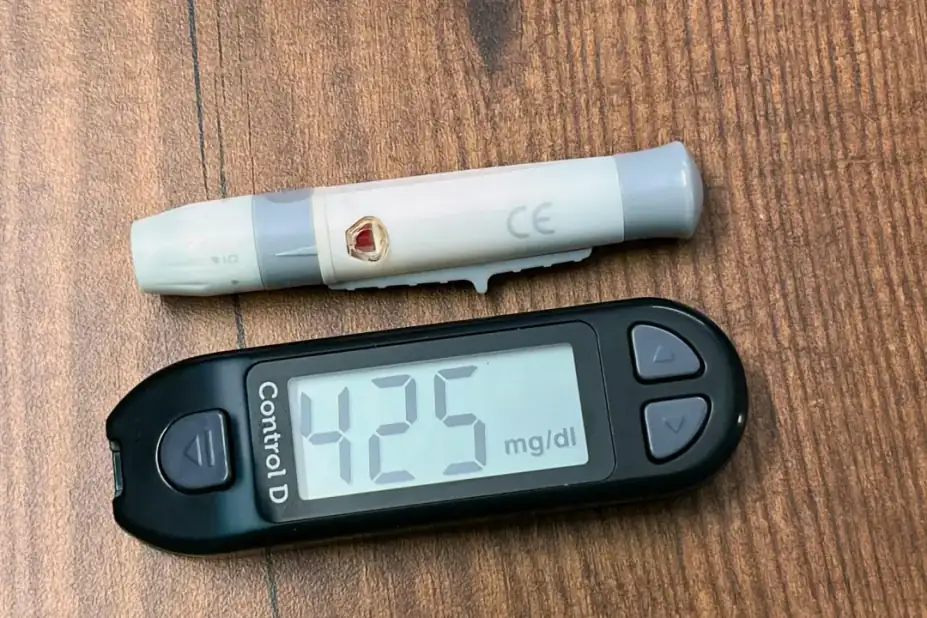
- Brief readings <70 during sleep. CGM compression artifact is common; finger-stick to verify before alarming.
- Glucose variability itself as an independent target. The literature on "glycemic variability = aging" in non-diabetics is thinner than the marketing suggests.
Products
- Abbott Libre 3 / Libre Rio / Stelo. 14-day sensors, ~$75-100 per sensor retail. Most accessible.
- Dexcom G7 / Stelo. 10-day sensors, slightly better accuracy, ~$100-150 per sensor. Smaller applicator.
- Levels / Nutrisense / Signos. Subscription services that bundle sensors + an app layer. Convenience premium; the underlying sensors are the Abbott/Dexcom hardware.
Prescription status varies by state. Stelo is OTC in most US states as of 2024.
What to pair it with
- Walk test. The single most replicated non-drug intervention: a 10-15 minute walk within 30 minutes post-meal typically reduces the peak by 10-30 mg/dL. Free, reliable, should be your first intervention.
- Meal order. Veg and protein before carbs reduces postprandial glucose excursion by 20-40% in small trials.
- Apple cider vinegar pre-meal. The acetic acid inhibits alpha-amylase; meta-analyses show modest effect (~10-20 mg/dL attenuation). Not snake oil; not a miracle either.
How to actually run a 14-day trial
The single biggest failure mode is wearing a CGM for 14 days and not learning anything useful. The trial design matters. Two protocols that produce reliable signal:
Protocol A: baseline-then-targeted. Days 1-3: eat your normal diet, no changes. Establish a baseline glucose curve and find the worst 2-3 meals (highest peaks, slowest returns). Days 4-14: keep the diet that produced clean responses, modify the worst meals only (smaller portions, food order, post-meal walk). The comparison is direct: does the same meal produce a smaller curve when modified?
Protocol B: A/B testing on specific foods. Pick 3-5 foods you eat regularly that you're suspicious about (oatmeal, pasta, granola, that one smoothie). Eat each at a controlled time (mid-morning, no other food in 3 hours, no exercise) on different days. The clean comparison shows which specific foods are your individual triggers. Most adults have idiosyncratic responses: oatmeal spikes 80 mg/dL for one person and 30 mg/dL for another.
The principle: passive observation produces almost no learning. Pre-committed comparisons produce reliable insight.
Patterns specific to insulin-resistance early signals
Some patterns on CGM are worth flagging even within "normal" ranges, because they predict metabolic trajectory beyond the snapshot HbA1c reading:
Persistent post-prandial peaks above 140 mg/dL in adults with normal HbA1c. The "normal HbA1c, abnormal post-meal" pattern catches early insulin resistance before HbA1c moves. Worth a fasting insulin draw if the pattern holds across 2+ weeks of varied meals.
Slow returns to baseline (>3 hours) after typical meals. Healthy non-diabetics return to baseline within 90-120 minutes for moderate carb meals. A consistent 3+ hour return is an early insulin-resistance signal.
Dawn phenomenon overnight. Glucose rising from 80 to 105 overnight reflects hepatic glucose output driven by morning cortisol. In healthy adults this is mild and brief. A pronounced dawn rise (above 110 in the 4-7 am window) flags sleep-disordered breathing or early metabolic dysfunction.
Reactive hypoglycemia post-carbs. Rare in healthy adults; more common in early-stage metabolic syndrome. Glucose drops below 70 within 2-3 hours of a high-carb meal because of overshooting insulin secretion. Distinct from late-fasted hypoglycemia.
The Klonoff 2017 framework on CGM accuracy in healthy non-diabetics established that the readings are reliable enough for these pattern-recognition use cases ( Klonoff et al. 2017 ), and Shah 2019 normative ranges ( Shah et al. 2019, n=153 ) provide the comparison baseline. Beyond those, a 14-day trial is enough data to surface your individual top 3 problem foods and any of these early-signal patterns.
Compression artifact, sensor warm-up, and other noise sources
CGM data has known noise sources worth recognizing before drawing conclusions:
First-day warm-up error. Most sensors (Abbott Libre 3, Dexcom G7) read 10-30 mg/dL low for the first 12-24 hours after insertion. The Day 1 lows are mostly artifact. Calibrate against fingerstick if any reading seems implausible.
Sleep compression artifacts. Lying on the sensor compresses interstitial fluid flow and can produce dropping readings of 60-70 mg/dL that aren't real. Common pattern: glucose drops from 90 to 65 over 30 minutes during sleep, then recovers when you roll. Almost always artifact.
Post-exercise lag. Interstitial glucose lags behind blood glucose by 5-15 minutes during fast changes. Post-exercise readings underestimate the actual blood glucose excursion if you check immediately after.
Acetaminophen interference. Some sensor chemistry (less common in modern Dexcom and Libre) cross-reacts with acetaminophen. Read your specific sensor's interference list.
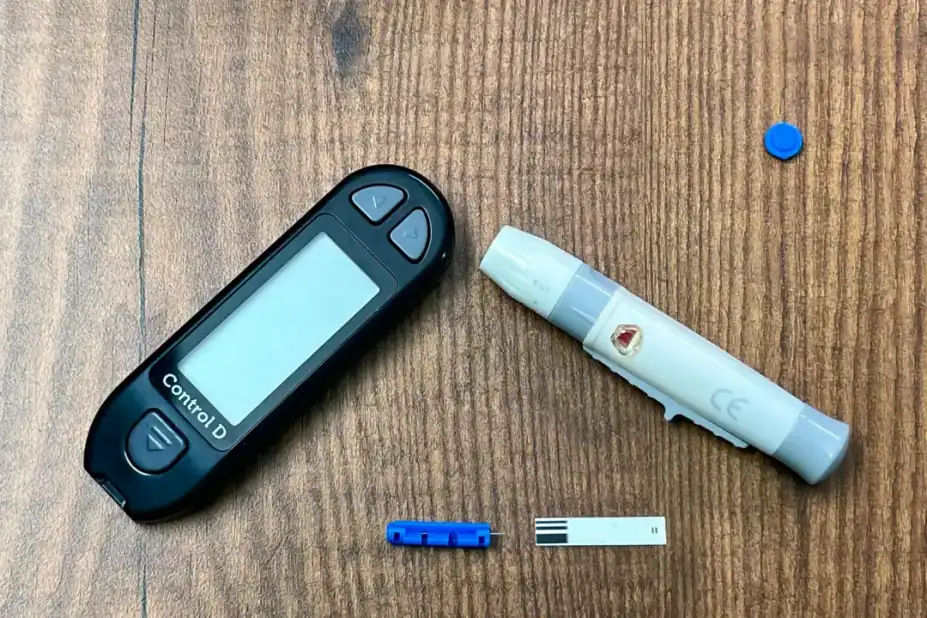
The signal-to-noise rule: any reading that's implausible (very low, very fast change) gets a fingerstick verification before being treated as data. Most CGM users don't keep a meter at home, which is the practical gap that often produces "the CGM said I went hypo" panic that's actually compression artifact.
When to stop wearing
The endpoint of a CGM trial isn't "I have a perfect dashboard." It's "I have specific decision rules for this individual person." Stop wearing when:
- You've identified your top 3-5 problem foods and committed to specific changes (reduce portion, food order, post-meal walk).
- You've established whether your dawn phenomenon is real and whether it warrants further workup.
- You've validated whether the meal-timing changes you've considered (TRE, no-late-eating) actually move your overnight glucose.
- The data has stopped surprising you. Two weeks of "yes, the same meal produces the same response" is the signal you've extracted what's there.
Continued CGM wear past the learning phase mostly produces orthorexia-adjacent over-monitoring rather than additional information. The 14-day-twice-a-year framing is the operational sweet spot: enough data for learning, not enough to drive obsessive food monitoring.
Counter-view
Adam Brown (diaTribe) and established diabetologists argue that non-diabetics reading "this meal spiked me to 150" as actionable data risks orthorexia-adjacent behavior; the underlying physiology is normal and the number requires context. Casey Means and Levels argue the learnings from 14-30 days of CGM use durably reshape food choices. Both have a point. The pragmatic middle: use CGMs as a short-duration learning tool, not a long-term optimization device.