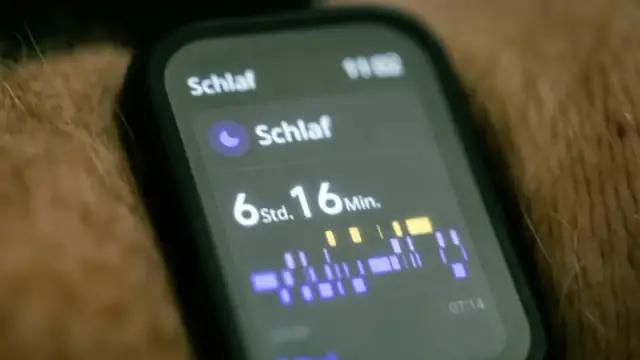
The consumer sleep-tracking landscape settled into three contenders post-2023. Picking between them is about the wrist/finger form factor and ecosystem fit, not accuracy, because all of them are similarly accurate at what they can do and similarly imperfect at what they can't.
What the PSG comparison actually showed
Chinoy et al. 2021 (n=8, Sleep) compared 7 consumer devices to polysomnography across one night per subject, controlled laboratory conditions ( Chinoy et al. 2020, n=8 ).
Findings:
- Total sleep time: Oura within ~8 min of PSG on average; Fitbit within ~12 min; Apple Watch and Garmin similar. All devices biased toward overestimating total sleep by classifying quiet wake as light sleep.
- Sleep/wake classification: sensitivity (detecting sleep) was high across all, 90%+. Specificity (detecting wake during the night) was lower, 50-70%. Translation: the watch calls more time "sleep" than PSG does.
- Stage classification: deep sleep and REM detection were noisy across devices. Whoop and Oura were closest on deep sleep; REM detection was equally poor across all devices, 50-60% accuracy vs PSG epochs.
The sample size is small. Devices have released multiple firmware updates since. The directional finding, that wearables are good for total-sleep trends and bad for stage-level detail, has not been overturned.
Device-by-device
Oura Ring (Gen 3 / Gen 4). Finger-worn photoplethysmography + temperature sensor. Best-in-class for passive comfort (you forget it's there). Sleep algorithm is the strongest in the consumer lineup. Battery ~5-7 days. Subscription $5.99/month unlocks most features post-2022. No screen; app-first.
Whoop (4.0 / 5.0). Arm/wrist strap, no screen, no standalone hardware sale; $30/month or $199/year membership includes the device. Strength-of-recovery framing is the best of the three; strain score + sleep coach produces more behavior change than the bare data. Proprietary charger that slides on the band lets you charge without removing.
Apple Watch (Series 9/10/Ultra). General-purpose smartwatch with sleep as one of many features. Best ecosystem integration if you're an iPhone user: AutoSleep, Sleep++ third-party apps extend the native tracking. Battery the weakest of the three; nightly wear requires daytime charging discipline. No subscription.
Garmin (Forerunner, Venu, Enduro). Strongest for endurance athletes' training metrics; sleep tracking competent but less polished than Oura/Whoop. Battery excellent (weeks on some models). No subscription.
Fitbit (now Google). Once the leader, now in managed decline under Google. Sense 2 and Charge 6 are fine; Fitbit Premium has useful insights. Roadmap uncertain.
The underlying sleep biology the wearables try to approximate is well characterized; Besedovsky 2019 reviews sleep-immune crosstalk across the stages these devices badly misclassify ( Besedovsky et al. 2019 ). The physiological importance of the detail the wearables miss is the exact argument against trusting their stage classification to change behavior.
Which one to pick
| Phase | Dose | Notes |
|---|---|---|
| Sleep-first | Oura | Best passive comfort + algorithm. $300 ring + $6/mo. |
| Recovery-first (athlete) | Whoop | $30/mo strap+service. Strain + recovery framing. |
| General-purpose, iPhone user | Apple Watch | Ecosystem wins; nightly charge discipline required. |
| Endurance athlete | Garmin Forerunner/Enduro | Best-in-class training metrics; multi-week battery. |
| Budget | Fitbit Charge 6 | Under $160. Basics covered. Google roadmap uncertain. |
What none of them do well
- Accurate REM detection. You cannot trust the minute-level REM numbers. Treat them as directional.
- Detecting disordered breathing. No consumer wearable replaces a proper sleep study for OSA screening. AutoSleep and Oura's snore detection is a starting signal, not a diagnosis.
- Accurate HRV for anything other than trending. Morning HRV numbers vary ±10-20% night-to-night from the same person; use your own rolling baseline, not other people's numbers.
- Blood pressure or blood glucose. Neither is non-invasively measurable at current consumer wearable tech.
Counter-view
The "orthosomnia" critique (Baron 2017 Baron, Abbott, Jao, Manalo & Mullen 2017 ) is real: people develop sleep anxiety from tracker data and paradoxically sleep worse. If you find yourself checking your sleep score with dread before looking at anything else in the morning, the tool is hurting more than helping. Stop wearing for a month, see if your life improves.
The opposite camp (Casey Means, Bryan Johnson) tracks everything continuously and produces meaningful behavior change from it. Both can be right. The deciding question: is the data changing your behavior?