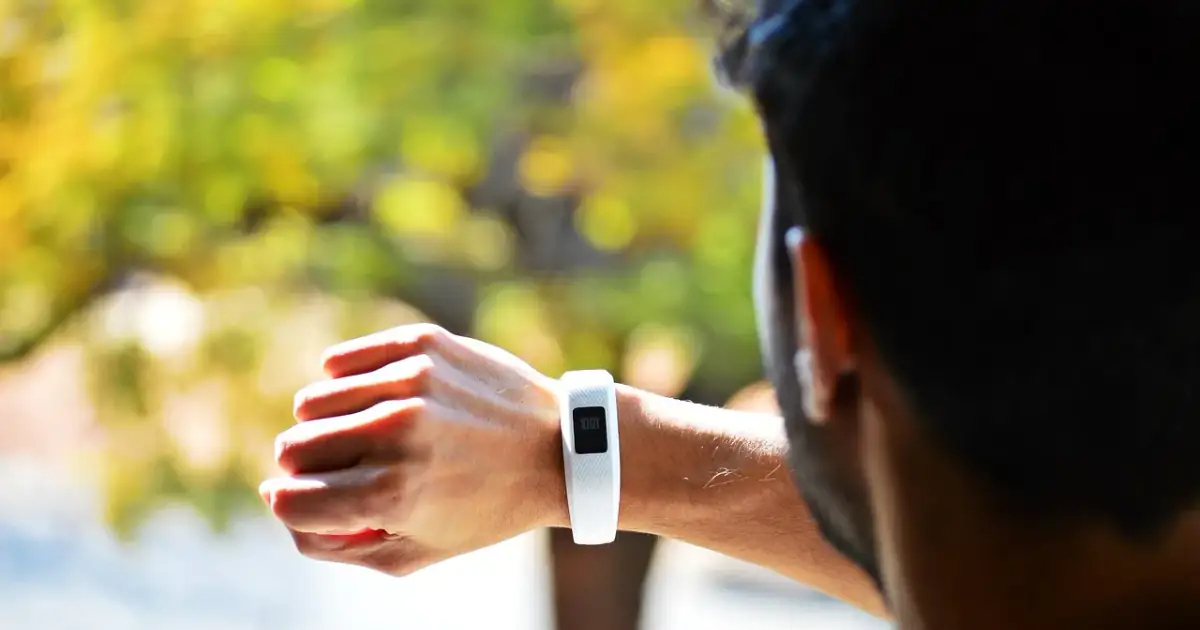
Self-quantification is most useful when it changes behavior. This guide is about building a small, durable data pipeline that you actually act on, rather than chasing every new device.
The minimum viable stack

A wearable for sleep, HRV, and resting heart rate trends. Oura, Whoop, Apple Watch, Garmin all work. Chinoy 2021 (n=8, PSG comparison) found total sleep time accurate to within ~5-15 minutes across leading devices; stage classification mediocre; REM detection worst ( Chinoy et al. 2020, n=8 ). Consistency with one device matters more than which one you pick. Replace every 2-3 years as the algorithms improve.
An annual full panel. CBC, CMP, lipids with ApoB (not just LDL-C), HbA1c, fasting insulin, full thyroid (TSH + free T4 + free T3, not TSH alone), 25-OH vitamin D, ferritin, hsCRP. Add testosterone/SHBG/estradiol for men, full hormone panel for pre- and peri-menopausal women. See Hormones Across Life Stages for the sex-specific additions.
Spot CGM trials. A 14-day continuous glucose monitor every 6-12 months is more informative than continuous use for non-diabetics. You learn your problematic foods, then stop wearing it. Shah 2019 (n=153, healthy nondiabetics) established normative ranges ( Shah et al. 2019, n=153 ): mean ~99 mg/dL, time-in-range 70-140 mg/dL ~96%. If you're significantly outside that, act.
Optional add-ons
- OmegaQuant Omega-3 Index. Target 8-12%. Most untested Americans run ~4-6%. See the omega-3 EPA vs DHA article for the dose math.
- Biological age services. TruDiagnostic (methylation-based), elysiumHealth (NAD-based), Function Health (bundled lab marketplace). Useful as one more trend signal, not a verdict. The Levine PhenoAge calculator gives you one baseline for free from your standard panel.
- ApoB-specific retest quarterly if you're titrating a statin or PCSK9 inhibitor.
What to deprecate
- Body composition scales. Bioimpedance varies ±3% day-to-day; DXA every 6-12 months tells you more for less fuss.
- Continuous CGM for non-diabetics after the first few months. The signal-to-noise degrades once you've learned your patterns.
- Any app that just visualizes your wearable data without adding a decision rule. Pretty dashboards do not change behavior.
Connecting the dots
The Biological Age Estimator uses 9 markers from a standard panel. Once you have your annual lab draw, plug the numbers in. Track Phenotypic Age year over year; movements of ±2 years are within noise, bigger moves are signal.
What each wearable is actually good at
The brand-agnostic claim ("any wearable works for trends") is honest but incomplete. The devices have real differences once you're past the basics:
Oura. Strongest at sleep staging and overnight HRV. Ring form factor avoids wrist-based-PPG artifacts during weight training. Weakest at activity tracking and continuous daytime HRV; the ring samples sparingly during the day to preserve battery.
Whoop. Strongest at strain quantification and continuous daytime HRV. Wrist strap. The "strain score" is calibrated to compare across days, which is useful for periodization. Weakest at sleep staging in the deep-versus-light boundary, where it tends to misclassify restless light as deep.
Apple Watch / Garmin. Strongest at activity tracking, GPS, and pace-and-cadence metrics. Apple has medical-device-grade ECG and AFib detection, which is the most clinically useful addition the wearable space has shipped. Weakest at HRV trend reporting (the apps don't surface HRV the way Oura and Whoop do).
Continuous wear is overrated, in particular for HRV-guided training. The HRV signal is most informative as a 7-day moving average versus a 30-day baseline. Day-to-day HRV variance is high enough that single-day decisions on raw HRV are noisy. The right granularity is "is this week trending below the prior month?", and that's a weekly-glance use case, not a constant-monitoring use case.
Lab panel cadence: when annual is too frequent or too rare
The "one annual full panel" recommendation deserves nuance. Some markers update slowly and don't repay frequent retesting; others move fast and benefit from shorter cycles.
Slow-moving markers (annual is fine): vitamin D (changes seasonally but trends slowly), thyroid (TSH changes over months, not weeks), full hormone panels in stable adults, ferritin in non-anemic adults.
Faster-moving markers worth retesting at 3-6 months when titrating:
- ApoB on a statin titration. Retest at 8 weeks after a dose change to confirm response.
- HbA1c during a metabolic intervention (continuous monitor, dietary change). Retest at 12 weeks.
- hsCRP after starting an anti-inflammatory protocol or weight loss. Retest at 8-12 weeks.
- Fasting insulin during a low-carb or weight-loss intervention. Retest at 12 weeks.
Markers that don't repay frequent retesting unless intervening: full thyroid panels in stable adults, MCV/RDW in non-anemic adults, micronutrient panels (these are mostly snapshot rather than trend).
The cadence rule of thumb: if you have a lever you can pull and the marker tracks the lever, retest at the timescale the marker responds to. If you're not intervening, annual is enough.
CGM: what to actually look for in the 14 days
The "14-day spot CGM" recommendation is well-supported but requires knowing what to look at. Most people put on a CGM, watch the line move, and learn nothing. The four patterns worth looking for:
-
Post-meal glucose excursions. The shape and amplitude of the curve after each meal. Healthy non-diabetics typically peak at 120-140 mg/dL within 60-90 minutes post-meal and return to baseline within 2-3 hours. Excursions above 160 mg/dL repeatedly, or slow returns to baseline, flag insulin resistance.
-
Overnight stability. Healthy non-diabetics maintain glucose 75-95 mg/dL overnight. Variance above 15-20 mg/dL during sleep flags either dawn-phenomenon insulin resistance or sleep-disordered breathing.
-
Stress-induced spikes. Glucose elevation during high-stress periods (work deadlines, conflict, poor sleep) is real and informative. The cortisol-driven hepatic glucose output is worth seeing in graphical form once.
-
Specific food responses. The food-by-food response varies enormously between individuals. Knowing your individual response to oatmeal, white rice, ice cream, etc. is the highest-yield information from a 14-day CGM trial. Document the worst 2-3 personal triggers and adjust accordingly.
The Klonoff 2017 framework on CGM accuracy in non-diabetic populations established that the readings are reliable enough for these pattern-recognition use cases ( Klonoff et al. 2017 ). The Shah 2019 normative ranges ( Shah et al. 2019, n=153 ) give you the comparison baseline. Beyond that, two weeks of data is enough to surface your top 3 problem foods.
Decision rules: the data must trigger an action
The single biggest failure mode of self-quantification is data without decision rules. The wearable data is informative only if you've pre-committed to specific actions at specific thresholds.
Examples of clean decision rules:
- HRV 2 standard deviations below 30-day baseline → switch high-intensity session to Zone 2.
- Sleep efficiency under 80% for 3+ consecutive nights → review sleep hygiene, no alcohol that week.
- ApoB above 80 mg/dL on annual lab → start or up-titrate statin in conversation with clinician.
- HbA1c above 5.6% on annual lab → 14-day CGM trial within 2 months to identify drivers.
- Fasting insulin above 7 uIU/mL → review carbohydrate distribution and meal timing.
The decision rules are generic; the thresholds are individual. The exercise is writing them down before getting the data, so the rule fires automatically rather than as an after-the-fact rationalization.
The counter-view
Orthosomnia, the anxiety-about-sleep phenomenon driven by sleep-tracker data, is real. Daniel Kahneman-school behavioral economists argue most personal-data optimization is an illusion of control: the tools make us feel more in control without actually changing outcomes. They have a point. The empirical response: if your wearable data isn't changing behavior within 90 days of getting it, stop wearing it.