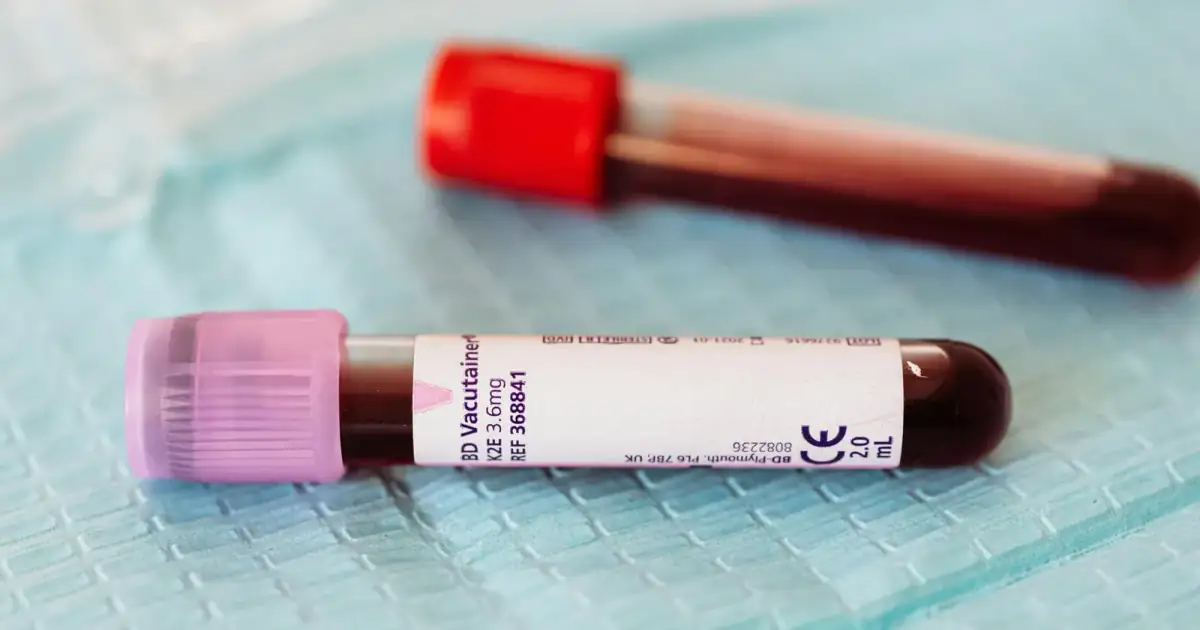
Creatinine is the breakdown product of phosphocreatine, generated in muscle at a roughly constant rate per unit of muscle mass and cleared almost entirely by glomerular filtration. The reading on a CMP is therefore a ratio of muscle production to renal clearance. Most clinicians collapse this into a single eGFR number; for the biological-age calculator we use raw creatinine because that is what Levine 2018 modeled.
What is serum creatinine?
Skeletal muscle holds ~120 g of creatine and phosphocreatine per kg of muscle. Roughly 1.6-2.0% of this pool degrades to creatinine each day, non-enzymatically. The kidney filters it freely at the glomerulus and excretes it in urine with negligible reabsorption. Steady-state serum creatinine is the production rate divided by the clearance rate.
This means three things complicate the reading:
- Muscle mass. A 95-kg powerlifter and a 55-kg sedentary woman with the same kidney function will have very different creatinines.
- Recent meat intake. Cooked meat contains preformed creatinine; a large steak can transiently raise serum creatinine by 0.1-0.2 mg/dL for several hours.
- Creatine supplementation. Five grams per day saturates muscle stores in 3-4 weeks and raises baseline serum creatinine 0.1-0.3 mg/dL with no change in true GFR. This is cosmetic, not pathology, but it confuses lab interpretation.
What is a normal creatinine range?
Standard adult range is 0.6-1.2 mg/dL (53-106 micromol/L), with women centered ~0.1-0.2 lower than men because of muscle-mass differences. The longevity literature does not have a strong "creatinine target"; it has a kidney-function target.
eGFR thresholds (CKD-EPI 2021):
- >=90 mL/min/1.73 m^2: normal.
- 60-89: mildly decreased; common above age 60.
- 45-59: moderately decreased; CKD stage 3a.
- <45: progressive workup warranted.
The CKD-EPI 2021 equation, derived by Inker et al. on pooled cohorts, removed the race coefficient and reduced bias in Black adults Inker et al. 2021 . Most US labs migrated by 2023; ask your lab which equation is used.
How it feeds into PhenoAge
Levine et al. 2018 included raw serum creatinine as one of nine inputs in the PhenoAge formula Levine et al. 2018 . The coefficient is positive: higher creatinine raises calculated phenotypic age. This works at population scale because creatinine elevations from real CKD outweigh the noise from muscle and meat. For an individual lifter or someone on creatine, the raw number can mislead by 1-2 PhenoAge years upward; the eGFR adjustment is a better gauge of actual kidney health. Run both in the calculator and treat large discrepancies as a flag for cystatin C testing.
What does high creatinine mean?
Real elevations matter. Each 1 mL/min/1.73 m^2 decline in eGFR below 60 associates with measurable rises in cardiovascular and all-cause mortality across cohorts. CKD is a strong independent risk factor for cardiovascular events, comparable in magnitude to diabetes. Stage 3a CKD (eGFR 45-59) raises 10-year cardiovascular mortality roughly 2-fold versus matched eGFR-90 controls.
Spurious elevations are common and benign:
- Creatine supplement. Expect +0.1-0.3 mg/dL. Stop for 4 weeks if you need a clean baseline; the elevation reverses.
- High-meat diet, sample drawn within 4 hours of a large steak. Re-test fasted.
- Heavy resistance training the day before the draw. Transient muscle leak; minor effect (~0.05-0.10 mg/dL).
- Trimethoprim, cimetidine. Block tubular secretion of creatinine, raise serum creatinine 0.1-0.4 mg/dL without changing GFR.
- Vigorous resistance training over years. Higher steady-state muscle mass raises baseline creatinine permanently. A bodybuilder at 1.3 with eGFR 95 by cystatin C is fine.
If creatinine has crept up gradually with stable diet and training, that is not the lifters' caveat. That is the kidney signal, and it deserves a workup.
Cystatin C as the tiebreaker
Cystatin C is produced at a roughly constant rate by all nucleated cells, independent of muscle mass. Shlipak et al. 2013 pooled 11 cohorts (n=11,909) and showed cystatin C-based eGFR predicted mortality and ESRD better than creatinine-based eGFR, particularly in older adults Shlipak et al. 2013, n=11909 . The CKD-EPI 2021 equations include a creatinine + cystatin C combined estimator that outperforms either alone.
When to add cystatin C:
- Borderline creatinine eGFR (45-59) where the diagnosis matters.
- Athletes or lifters with high muscle mass and a creatinine that looks "off".
- Sarcopenic elderly where creatinine-based eGFR overestimates true GFR.
- Vegan patients with very low meat intake where creatinine runs artificially low.
Cost is ~$30-50, often not covered without a clinical indication.
What drives it
Things that raise creatinine without changing eGFR:
- Creatine supplementation: +0.1-0.3 mg/dL.
- Acute heavy resistance training: +0.05-0.10 mg/dL transiently.
- Trimethoprim, cimetidine: +0.1-0.4 mg/dL.
- Cooked meat within 4 hours: +0.1-0.2 mg/dL.
Things that genuinely lower eGFR (and therefore raise creatinine):
- Hypertension (chronic; the dominant cause in adults over 60).
- Diabetes (the dominant cause of new-onset CKD globally).
- NSAIDs at high chronic dose: 10-20% reduction in GFR over months.
- Dehydration: acute, reversible.
- Contrast-induced nephropathy: usually transient.
- Glomerular disease: rarer, requires nephrology.
Things that lower creatinine genuinely:
- Sarcopenia, severe weight loss.
- Pregnancy: GFR rises 40-50% in the second trimester.
- Long-term very-low-protein diet.
Cross-marker patterns
Creatinine reads best alongside albumin (low albumin + elevated creatinine + proteinuria points to nephrotic syndrome) and BUN (BUN/creatinine ratio >20:1 suggests pre-renal cause; <10:1 suggests intrinsic renal). For PhenoAge specifically, creatinine pairs with alkaline phosphatase and albumin as the "organ-function" trio in the formula.
How to act on yours
Testing cadence:
- Healthy adult under 50, no risk factors: annual CMP.
- Hypertension, diabetes, family history of CKD: every 6 months, with urine albumin-creatinine ratio.
- eGFR 60-89: every 6 months, evaluate ACR.
- eGFR <60: every 3-6 months under nephrology guidance.
Practical workflow if your creatinine looks high:
- Confirm fasting. Stop creatine supplementation for 4 weeks, redraw.
- Calculate eGFR with CKD-EPI 2021.
- Order urine ACR (albumin-creatinine ratio); >30 mg/g is the actionable signal regardless of eGFR.
- If eGFR is 50-70 and the muscle-mass picture is muddy, add cystatin C.
- If two readings agree and eGFR is <60, your clinician will trace the cause.
Counter-view
Some longevity-leaning clinicians (Peter Attia among them) argue that creatinine is the wrong primary kidney marker and that cystatin C should be the default in any patient with non-average muscle mass. The Shlipak et al. data supports this for prognosis. The counter-counter is cost: creatinine is included in every CMP at no marginal cost; cystatin C is a separate ~$30-50 add-on. The pragmatic rule: use creatinine and eGFR for routine screening, add cystatin C when the picture does not match the patient. The PhenoAge calculator uses creatinine because that is what Levine validated; if your creatinine is muscle-biased upward, expect a small overestimate of biological age.