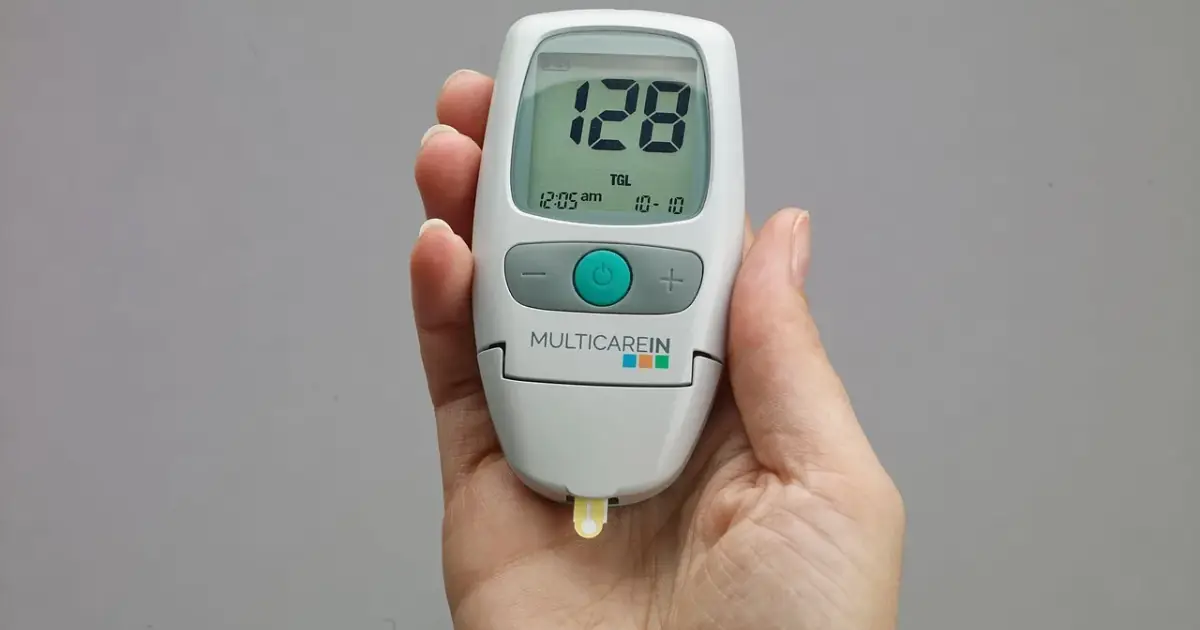
C-reactive protein is an acute-phase reactant produced by the liver in response to interleukin-6. The high-sensitivity assay (hs-CRP) reads the low chronic background that standard CRP misses. It is one of the cheapest reads of systemic inflammation available, and one of the most predictive single markers in cardiovascular risk stratification. It is also the most volatile of the PhenoAge inputs, which matters for interpretation.
What is hs-CRP?
CRP is synthesized by hepatocytes within hours of an inflammatory stimulus. Plasma half-life is ~19 hours; the level falls quickly once the underlying stimulus resolves. The molecule binds phosphocholine on damaged or apoptotic cell membranes and on certain bacterial polysaccharides, recruiting complement and phagocytes.
The "high-sensitivity" assay (hs-CRP) is the same molecule, measured with an assay sensitive down to ~0.05 mg/L instead of the standard ~5 mg/L floor. For longevity work the hs-CRP assay is the only one worth ordering; standard CRP is for acute infection workups. Cost is typically $10-25 in the US.
Risk bands (AHA/CDC consensus from the 2003 statement):
- <1.0 mg/L: low cardiovascular risk band.
- 1.0-3.0 mg/L: intermediate.
- 3.0-10.0 mg/L: high. Above 10 mg/L typically reflects acute illness, not chronic state.
Above 10 mg/L the assay is reading an acute inflammatory event (recent infection, injury, surgery), not chronic inflammation. Wait 2-4 weeks and redraw.
What is a normal hs-CRP range?
The 1.0/3.0 thresholds are cardiovascular-risk thresholds derived from Ridker and colleagues' work in the late 1990s and early 2000s. The longevity-optimal band is tighter. Many lean, fit adults run hs-CRP <0.5 mg/L; <0.3 is achievable.
Ridker et al. designed JUPITER on the basis of hs-CRP as a stratifier Ridker et al. (JUPITER) 2008, n=17802 . The trial enrolled 17,802 adults with LDL <130 mg/dL but hs-CRP >=2.0 mg/L and randomized them to rosuvastatin 20 mg or placebo. Rosuvastatin cut major cardiovascular events 44% over a median 1.9-year follow-up. The trial established hs-CRP as actionable: it identified a statin-responsive subgroup that LDL alone did not flag.
The Emerging Risk Factors Collaboration pooled 54 cohort studies (n=160,309) and found each SD-increment in log hs-CRP associated with a 37% higher coronary heart disease risk after adjustment for traditional risk factors Emerging Risk Factors Collaboration 2010, n=160309 . The meta did not establish causality, but the magnitude is consistent across cohorts.
How it feeds into PhenoAge
Levine et al. 2018 included CRP as one of the nine PhenoAge inputs Levine et al. 2018 . The coefficient is positive and the slope is steep at the low end: dropping from 5 mg/L to 1 mg/L produces a meaningful PhenoAge improvement, more than dropping from 15 mg/L to 10 mg/L. This reflects the population biology: most healthy adults sit below 1; values above 3 are a strong signal.
Run the calculator with two scenarios: your current hs-CRP, and a hypothetical 0.5 mg/L. The delta is what inflammation control could buy you in PhenoAge terms.
What does high hs-CRP mean?
Three frames for thinking about chronic elevated hs-CRP:
- Direct vascular biology. CRP itself binds oxidized LDL, activates complement, and promotes endothelial dysfunction. Whether this is causal or just a correlate of upstream IL-6 is debated; Mendelian randomization studies of CRP-coding variants have largely been null, suggesting CRP is more proxy than cause.
- Upstream IL-6. CANTOS (canakinumab, anti-IL-1beta) reduced cardiovascular events 15% in patients with prior MI and elevated hs-CRP, and the effect tracked with the magnitude of hs-CRP reduction. This is the strongest evidence that the upstream inflammatory pathway matters causally.
- Composite signal. Hs-CRP integrates multiple sources: visceral adipose, periodontal disease, chronic viral infections (CMV, HSV), gut dysbiosis, autoimmune activity, sleep disruption, and smoking. Any of these can raise it; reducing any of them can lower it.
What drives it
Modifiable factors with quantified effects:
- Body fat, particularly visceral. Each 1 kg of visceral adipose roughly raises hs-CRP 0.1-0.2 mg/L. A 5-10% body weight loss in overweight adults typically lowers hs-CRP 30-50% within 6 months.
- Sleep. Even one week of restricted sleep (4-6 h/night) raises hs-CRP 30-40% in metabolic ward studies. Chronic short sleep maintains a higher baseline.
- Periodontal disease. Treatable, often-overlooked driver. Treating moderate-to-severe periodontitis lowers hs-CRP 0.5-1.0 mg/L on average.
- Smoking. Raises hs-CRP 50-100%; cessation reverses within 3-6 months.
- Aerobic fitness. Each 1 MET of cardiorespiratory fitness associates with ~10% lower hs-CRP. The dose-response is gradual and replicated.
- Diet pattern. Mediterranean-pattern, high-fiber, lower in ultra-processed foods is associated with hs-CRP 1-2 mg/L lower than typical Western diet at population scale.
- Statins. Lower hs-CRP 15-30% independent of LDL effect. The pleiotropic anti-inflammatory action is real.
- Low-dose aspirin (81 mg). Lowers hs-CRP modestly (~10-20%); not used for CRP per se.
- Curcumin, omega-3 EPA. Modest effects (10-20% reduction at meaningful doses); the evidence is weaker than the marketing.
What raises a single reading
- Acute infection (cold, flu, UTI): can push hs-CRP to 10-50 mg/L for 1-3 weeks.
- Recent vigorous exercise (within 24-48 h): +1-3 mg/L transiently.
- Vaccination: +1-5 mg/L for 3-7 days.
- Dental work: +1-3 mg/L for 1-2 weeks.
- Acute injury, surgery, trauma.
Any of these will distort the read. If you are testing for chronic state, draw at least 2 weeks after a cold, vaccination, or hard workout, and confirm with a second draw 4 weeks later. Discard any reading >10 mg/L unless you can identify the acute trigger.
Cross-marker patterns
Hs-CRP plus albumin is a useful inflammation pair: high CRP plus low albumin is a stronger frailty/mortality signal than either alone. Hs-CRP plus fasting glucose plus elevated triglycerides points to metabolic syndrome. Hs-CRP plus elevated white blood cell count and elevated RDW is the "inflammaging" signature seen in older adults and tracks mortality more sharply than any single marker.
How to act on yours
Testing cadence:
- Healthy adult: annual hs-CRP as part of a longevity panel.
- Anyone with elevated CV risk, autoimmune history, or central obesity: every 6 months.
- Working on lowering hs-CRP: redraw at 12 weeks after intervention.
Practical workflow if your hs-CRP is 3 mg/L:
- Verify it is not acute. Wait 2-4 weeks past any cold, vaccination, or hard training week. Redraw.
- If still 2-3+ mg/L: visceral fat, sleep, gum health, smoking, training volume in that order.
- If hs-CRP stays elevated after 6 months of clean lifestyle work, get the autoimmune panel (ANA, RF, anti-CCP) and consider chronic infection workup.
- Statins are reasonable in someone with elevated cardiovascular risk and elevated hs-CRP, on the JUPITER framework. See statins for longevity.
Counter-view
Mendelian randomization studies of CRP itself (using CRP-gene variants) have largely failed to show CRP as causal for cardiovascular disease. The genetic instrument argues that CRP is a marker of upstream inflammation, not the actor. Some critics (including the late researcher David Diamond) argue the JUPITER trial is overstated because it benefited from rosuvastatin's LDL-lowering effect alone and the hs-CRP stratification was post hoc rationalization. The pragmatic position: hs-CRP is a robust prognostic marker even if it is not the causal agent. Lowering it via lifestyle (which moves all of the inflammation drivers) is unambiguously good; lowering it via aspirin or canakinumab is more nuanced.