
Lymphocyte percentage is one of those numbers that most clinicians glance at and move on unless something extreme is happening. The longevity literature reads it as a stable indicator of immune reserve, and persistent lymphopenia (<20% or <1.0 x 10^9/L absolute) is one of the larger mortality signals on a routine CBC. The Levine PhenoAge calculator weights it negatively. The interpretation work is upstream: what is suppressing lymphocyte production or shortening their lifespan.
What is lymphocyte percentage?
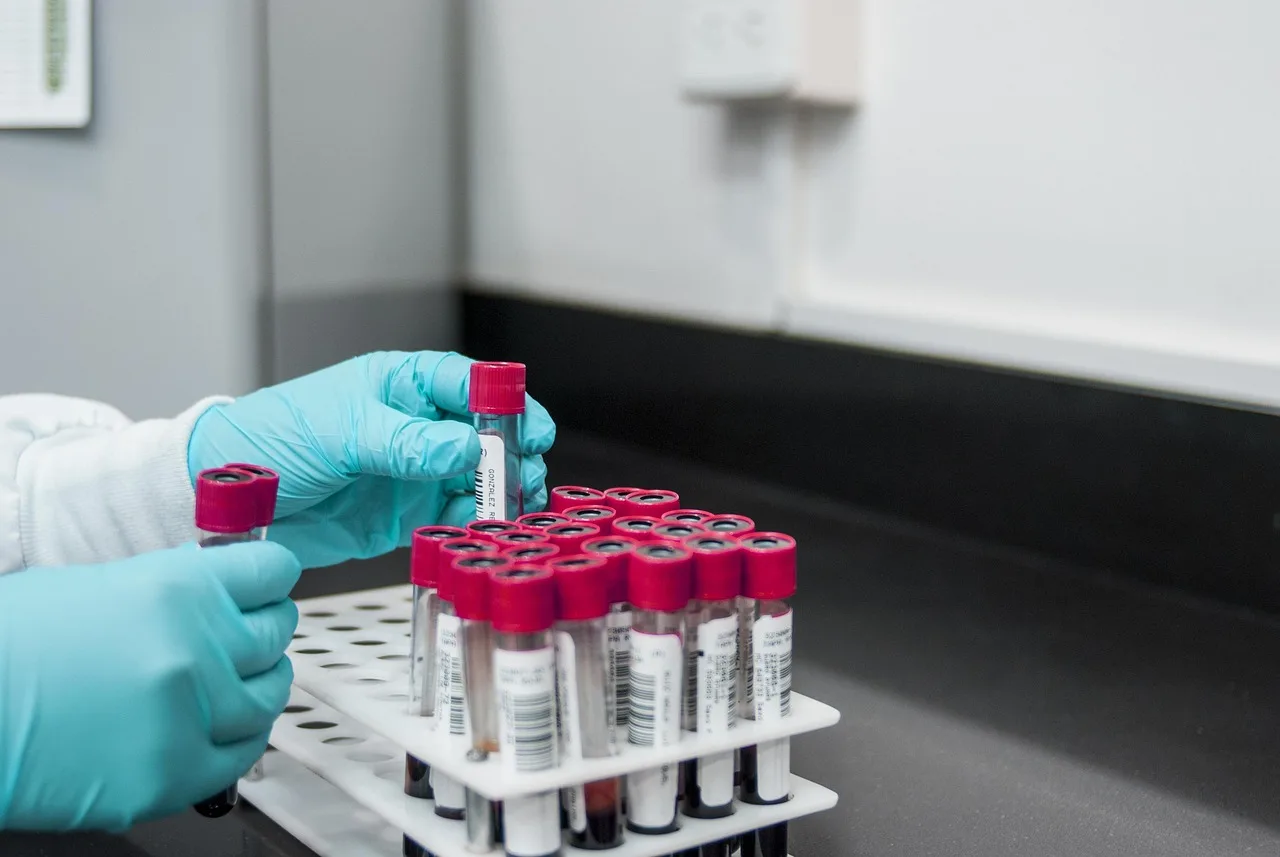
A complete blood count differential reports the percentage of each major white cell type: neutrophils (typically 50-70%), lymphocytes (20-40%), monocytes (2-8%), eosinophils (1-4%), basophils (<1%). The absolute lymphocyte count (ALC) is the percentage times the total WBC. Both numbers are clinically useful; the absolute count is more interpretable because the percentage is sensitive to neutrophil swings.
Lymphocytes are predominantly T cells (~70%), B cells (~15%), and NK cells (~10%). Their lifespan in circulation ranges from days (effector cells) to decades (memory T cells). The blood pool is a tiny fraction of the total lymphocyte mass; circulating numbers reflect the equilibrium between bone marrow and thymic production, lymph-node trafficking, and turnover.
What is a normal lymphocyte range?
Standard ranges:
- Lymphocyte percentage: 20-40%.
- Absolute lymphocyte count: 1.0-4.8 x 10^9/L.
Population means in healthy adults sit around 30% and 2.0-2.5 x 10^9/L. These slowly drop with age: the average 80-year-old has a lymphocyte percentage 5-7 percentage points lower than the average 30-year-old, driven mostly by thymic involution and reduced naive T-cell output.
Longevity-optimal framing:
- 24-36% with ALC 1.5-3.5: optimal.
- 20-24% with ALC 1.1-1.5: monitor.
- <20% or ALC <1.1: lymphopenia; investigate.
- <10% or ALC <0.5: severe lymphopenia; clinical workup mandatory.
What does low lymphocyte percentage mean?
Warny et al. 2018 followed 98,344 Danish adults prospectively for a median of 5 years Warny et al. 2018, n=98344 . Adults with lymphocyte counts below 1.1 x 10^9/L had:
- 1.6x all-cause mortality.
- 2.8x infection-related mortality.
- 1.5x cardiovascular mortality.
- 1.6x cancer mortality.
The signal was independent of age, smoking, and comorbidities. The interpretation is that low absolute lymphocyte count is a marker of reduced immune competence; the immune system handles infection less effectively, surveils tumors less effectively, and resolves vascular inflammation less effectively.
Zidar et al. 2019 replicated and extended this in NHANES III and NHANES 1999-2010 cohorts (n=31,178), with 12-year follow-up Zidar et al. 2019, n=31178 . Lymphopenia (<1.5 x 10^9/L) carried a 1.6x all-cause mortality hazard. The neutrophil-lymphocyte ratio (NLR), which captures both halves of the inflammatory shift, performed slightly better than either component alone.
How it feeds into PhenoAge
Levine et al. 2018 included lymphocyte percentage as one of the nine PhenoAge inputs Levine et al. 2018 . The coefficient is negative: higher lymphocyte percentage lowers calculated phenotypic age. The slope is steeper at the low end of the distribution (a 25% to 20% drop matters more than a 35% to 30% drop). Run the calculator with your CBC differential to see the contribution.
PhenoAge uses percentage rather than absolute count because the model is fit to NHANES variables and percentage is the more universally reported field. For your own interpretation, use the absolute count when available; percentage of 18% can reflect lymphopenia (low ALC) or relative neutrophilia (high WBC), and the interpretation differs.
What drives it
Causes of low lymphocyte count or percentage, ordered by frequency in healthy-adult populations:
- Acute viral illness. A cold or flu can transiently drop lymphocytes 30-50% during the acute phase, with rebound over 2-3 weeks. COVID-19 is particularly notable for prolonged lymphopenia.
- Chronic stress, including overtraining. Sustained elevated cortisol redistributes lymphocytes out of circulation. Endurance athletes in heavy training blocks frequently show lymphocyte percentages of 15-22%; this resolves with deload.
- Aging, particularly post-thymic involution. Naive T-cell output drops sharply after age 40. By 80, most adults have lymphocyte percentages 5-7 points below their 30-year-old baseline.
- Chronic infections. HIV is the canonical example; chronic CMV reactivation can also depress counts.
- Autoimmune disease and immunosuppressive medication. Lupus, rheumatoid arthritis, IBD treated with thiopurines, methotrexate, or biologics.
- Malignancy or marrow infiltration. Less common but the most important to rule out in unexplained persistent lymphopenia.
- Severe protein-calorie malnutrition.
- Radiation therapy.
Causes of high lymphocyte count or percentage:
- Acute viral infection (mononucleosis, CMV).
- Chronic lymphocytic leukemia (CLL): typically asymptomatic, often discovered on routine CBC in adults over 60. Sustained ALC >5 x 10^9/L without obvious infectious cause warrants flow cytometry.
- Pertussis.
- Hypersensitivity reactions.
Modifiable drivers
Things you can do to maintain lymphocyte function:
- Train, but don't overtrain. Moderate aerobic and resistance training preserves immune function across decades. Chronic excessive endurance volume (>10-15 hours/week sustained) suppresses it.
- Sleep. 7-9 hours; lymphocyte counts and function are sensitive to sleep restriction. A single night below 5 hours measurably reduces NK-cell activity for 24-72 hours.
- Protein adequacy. Lymphocytes need substrate; very-low-protein diets (<0.6 g/kg) impair production. See protein targets for longevity.
- Resolve chronic infection load. Treat dental disease, suppress HSV with valacyclovir if reactivation is frequent, manage chronic viral infections.
- Manage chronic stress. Sustained cortisol elevation suppresses lymphocyte trafficking. See the cortisol HPA axis article.
- Vaccinate. Annual flu shot, COVID boosters per current guidance. Healthy lymphocyte response to vaccination is one of the few functional readouts available outside specialty labs.
There is no supplement that reliably raises lymphocyte counts in healthy adults. Vitamin D adequacy (25(OH)D >30 ng/mL) supports normal immune function but does not "boost" counts. Zinc deficiency suppresses T-cell function but is rare in well-fed populations. Marketing for "immune-boosting" products is mostly noise.
Cross-marker patterns
Lymphocyte percentage reads best alongside WBC count and RDW. The neutrophil-to-lymphocyte ratio (NLR) is computed as neutrophil count divided by lymphocyte count; values >3 in healthy adults flag systemic inflammation and predict mortality independently. Combine with elevated hs-CRP for the strongest "inflammaging" signal.
How to act on yours
Testing cadence:
- Healthy adult: annual CBC differential as part of a longevity panel.
- Adult with persistent lymphopenia (<1.1 x 10^9/L): workup includes HIV testing, immunoglobulin levels, lymphocyte subset analysis (CD4/CD8/B/NK), and consideration of marrow evaluation if other lines are also low.
- Athlete in heavy training: monitor; transient drops are expected, but counts should normalize during deload weeks.
If your lymphocyte percentage drops from 32% to 22% over 12 months without an obvious infection or training stressor, that is a real signal. Flag it with your clinician. The differential workup is straightforward and most cases turn out to be benign (chronic stress, undiagnosed infection, medication effect), but the small fraction that turn out to be early lymphoma or HIV deserve early diagnosis.
Counter-view
Some clinicians argue that lymphocyte percentage alone is too noisy to track over time and that absolute count or NLR should be the default. The data agrees: NLR is a more robust prognostic marker than either component alone, and absolute counts are more interpretable than percentages. The PhenoAge calculator uses percentage because that is what Levine modeled, but for your own clinical interpretation, default to absolute count. Note also that thymic involution makes age-related declines in naive T-cell output expected and not modifiable beyond what general health behaviors achieve; obsessing over lymphocyte percentage in a fit 65-year-old is not productive if other markers are clean.