
The RDA for protein (0.8 g/kg/day) was set to prevent deficiency in sedentary populations. It is a floor, not a target. For active adults, older adults, anyone cutting, and anyone on a GLP-1 drug, the target is substantially higher.
What the meta-analysis converged on
Morton 2018 (British Journal of Sports Medicine, 49 RCTs, n=1,863) analyzed protein supplementation effects on resistance-training outcomes in healthy adults ( Morton et al. 2017, n=1863 ). Findings:
- Protein intake above a plateau of ~1.62 g/kg/day produced no additional lean-mass benefit in most populations studied.
- Older adults (>50) plateaued at slightly higher intakes (~1.8 g/kg), suggesting anabolic resistance.
- Timing within a 3-4 hour window around training mattered less than total daily intake.
Stuart Phillips and colleagues have argued the real-world target for older adults should be closer to 2.0-2.2 g/kg/day to overcome anabolic resistance and age-related mTOR signaling decline ( Phillips et al. 2016 ). His case draws on stable-isotope muscle protein synthesis data showing that older muscle requires larger per-meal protein pulses to trigger equivalent synthesis responses.
Protein dose-response on lean mass: meta-analytic evidence
| Study | N | Duration | Design | Outcome | Finding |
|---|---|---|---|---|---|
| Morton 2018 meta cite | 1,863 across 49 RCTs | trial length 6-52 wk; pooled | meta-analysis of resistance-training RCTs with protein supplementation | Fat-free mass and 1RM strength | Plateau at ~1.62 g/kg/day; older adults plateau slightly higher |
| Phillips 2016 review cite | narrative synthesis of stable-isotope and RCT evidence | n/a (review) | expert review | Per-meal MPS thresholds and daily targets | Older adults need 35-40 g per meal; 2.0-2.2 g/kg/day argued for ageing and deficit contexts |
Synthesis The dose-response evidence converges around 1.6 g/kg/day as the active-adult plateau and a higher 2.0-2.2 g/kg/day target for older or cutting populations. Per-meal distribution matters more than total when daily protein is fixed at the upper end.
Per-meal distribution

Muscle protein synthesis peaks within 90-180 minutes of a protein-containing meal and subsides within 3-5 hours, even if protein keeps coming. This "muscle full" effect means dumping all your daily protein into one meal produces less synthesis than splitting it across 3-4 meals.
| Phase | Dose | Frequency | Notes |
|---|---|---|---|
| Active adult | 1.6 g/kg/day | split 3-4 meals | e.g., 80 kg man: ~130 g/day, 30-40 g per meal |
| Active adult, cutting | 2.0-2.2 g/kg goal bodyweight | split 3-5 meals | Preserves lean mass in caloric deficit |
| Older adult (60+) | 2.0-2.2 g/kg/day | split, ensure 35-40 g per meal | Anabolic resistance; smaller meals under-stimulate MPS |
| On GLP-1 | 2.0-2.2 g/kg goal bodyweight | split, may need to plan actively against appetite suppression | See the GLP-1 article |
| Sedentary RDA floor | 0.8 g/kg/day | any distribution | Prevents deficiency. Not an optimization target. |
The longevity counter-argument
Valter Longo and proponents of protein restriction for longevity cite two arguments:
- mTOR chronic activation and aging. High protein intake chronically activates mTORC1, which, in yeast/fly/mouse models, shortens lifespan when constitutively active. Rapamycin's lifespan-extending mechanism partly runs through mTORC1 inhibition.
- IGF-1 and cancer risk. Higher animal-protein intake correlates with higher IGF-1; IGF-1 is implicated in some cancer proliferation pathways; Longo's 2014 cohort reanalysis Levine et al. 2014, n=6381 flagged elevated all-cause and cancer mortality in high-protein-consuming adults aged 50-65.
The Levine 2014 NHANES protein-mortality reanalysis
| Study | N | Duration | Design | Outcome | Finding |
|---|---|---|---|---|---|
| Levine 2014 (NHANES III) cite | 6,381 | median 18 yr follow-up | Observational cohort reanalysis (NHANES III, 24-hr recall baseline only) | All-cause and cancer mortality stratified by protein intake | High protein intake associated with elevated mortality in 50-65 age group; reversed in 65+ where high protein associated with lower mortality |
Synthesis The Levine signal is age-stratified and based on a single 24-hour dietary recall, which is a known weak measurement instrument for habitual intake. The 65+ reversal is the operationally relevant finding for healthspan readers: in the age band where sarcopenia drives mortality, high protein associated with better outcomes.
The honest response to this argument:
- The mTOR story is strongest in organisms with shorter lifespans and more mTOR-dependent anabolic demand. Translating yeast/mouse lifespan data to humans has repeatedly failed at the quantitative level.
- Longo's cohort finding (age 50-65) reversed in the 65+ population: higher protein was associated with lower mortality. Sarcopenia kills more people than cancer in the elderly.
- Rapamycin lifespan extension Mannick et al. 2018, n=264 operates at doses and patterns (intermittent) that a dietary protein intervention does not replicate.
Practical take: if you are healthy, active, and past 40, the sarcopenia risk of under-consuming protein is larger than the mTOR-chronic-activation risk of over-consuming. If you have active cancer or a strong family history of hormonally sensitive cancers, a conversation with an oncology-literate clinician about protein targets is reasonable. Otherwise, follow Morton/Phillips.
Source quality
Animal proteins (meat, eggs, dairy) are "complete" (contain all essential amino acids in proportions close to human needs). Plant proteins are generally less complete; combinations (beans + grains) fill in the gaps. Leucine is the keystone amino acid for MPS triggering; 2-3 g of leucine per meal is the threshold. Whey protein contains ~10% leucine; most plant proteins ~6-8%.
For plant-based eaters, a practical adjustment: target slightly higher total protein (1.8-2.2 g/kg vs 1.6) or ensure a 20-30 g meal contains a complete-amino-acid combination.
Protein powder is fine
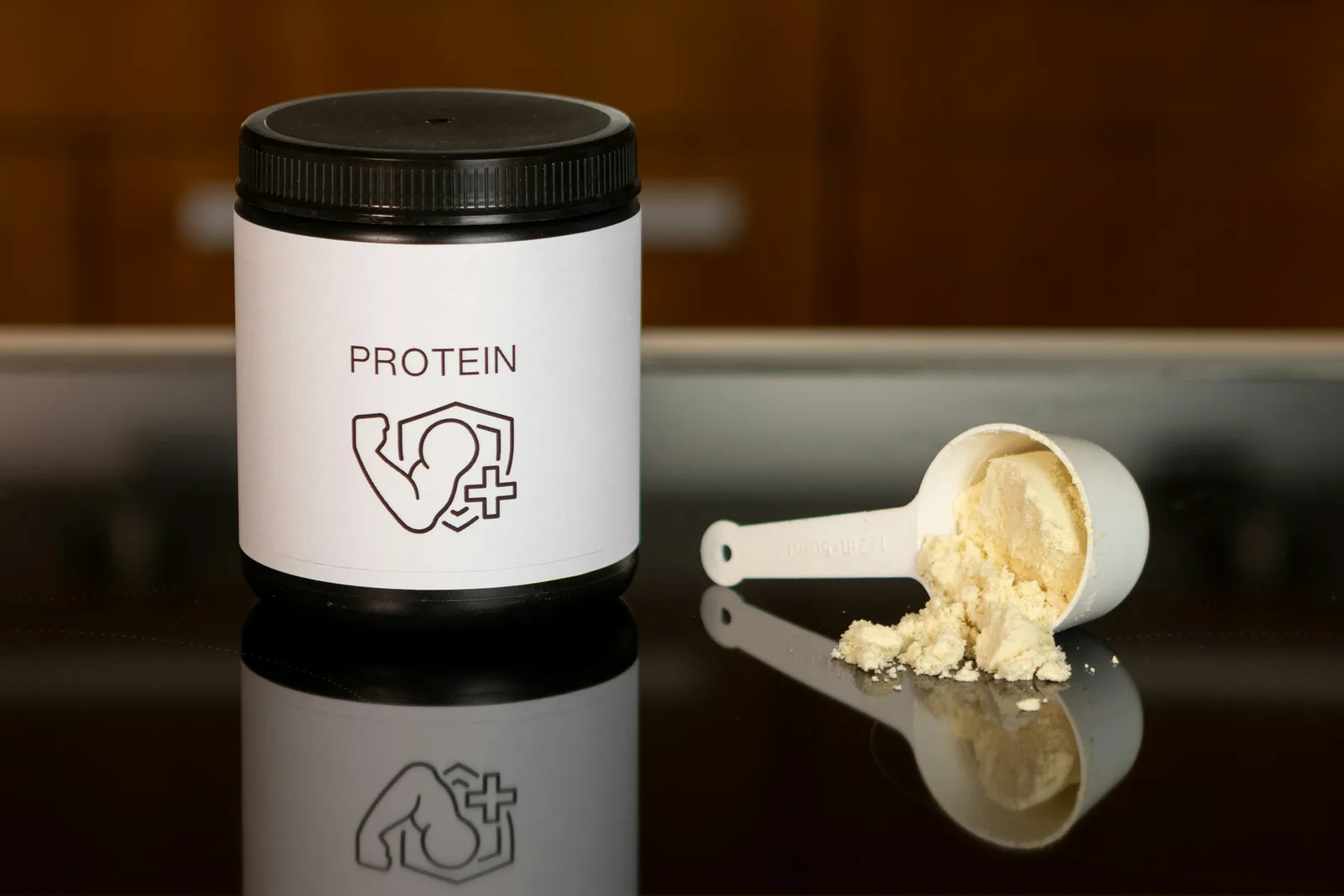
Whey concentrate or isolate from a reputable brand (NOW, Optimum Nutrition, Bulk Supplements, Transparent Labs) is cheap (~$25/kg, ~30-35 servings), convenient, and well-absorbed. Plant protein blends (pea + rice) can match whey's amino-acid profile at similar cost. Casein is slower-digesting, useful before long gaps between meals (e.g., before bed).
Counter-view
Gabrielle Lyon advocates for higher floor targets (1.8+ g/kg for most adults, not just the active or older) and is more hawkish on per-meal distribution than Morton's meta analysis strictly supports. Valter Longo is more cautious on animal protein specifically in the 50-65 window. Stuart Phillips is the middle: 1.6 for active younger, 2.0-2.2 for older. We lean Phillips.