
Regular sauna use has one of the cleanest observational signals in the longevity literature, and the mechanism story is sound. This is the protocol, plus the honest caveats on what we don't know.
The Finnish cohort data
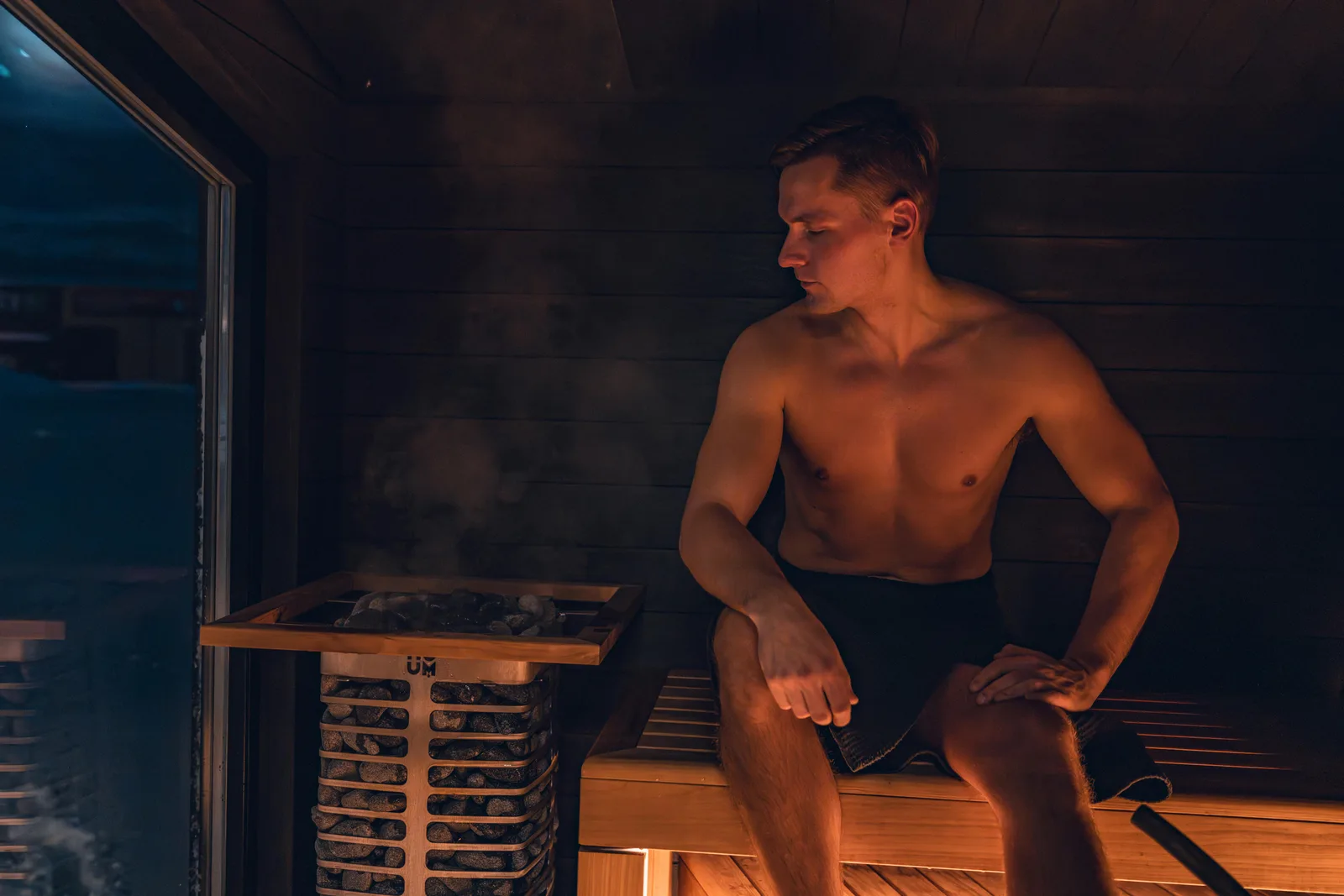
Laukkanen et al. 2015 (JAMA Internal Medicine, n=2,315, 21-year follow-up of middle-aged Finnish men) measured sauna frequency and duration at baseline and followed all-cause and cardiovascular mortality ( Laukkanen et al. 2015, n=2315 ).
Key findings:
- Frequency: 4-7 sessions/week associated with 63% lower sudden cardiac death than 1 session/week. All-cause mortality ~40% lower.
- Duration: sessions >19 min associated with ~52% lower fatal CVD than sessions <11 min, at equivalent frequency.
- Dose-response continued linearly: more sessions and longer sessions both helped, no plateau detected in the population studied.
Subsequent publications from the same cohort (Laukkanen 2018, Mayo Clinic Proceedings) extended to dementia (26% lower with 4-7 sessions/week) and hypertension (46% lower incidence of new hypertension) ( Laukkanen et al. 2018 ).
What's observational about this, and what it means
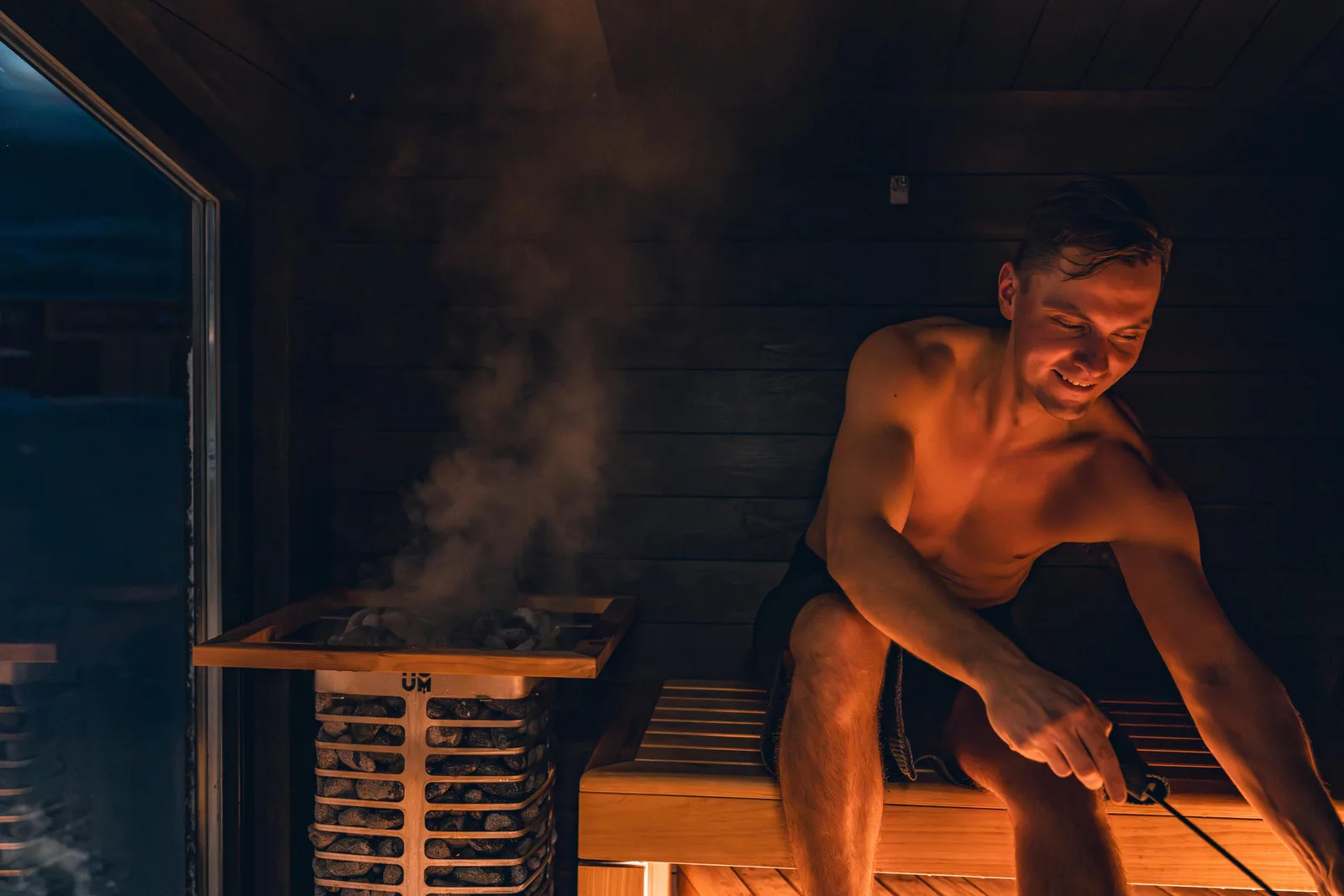
The Finnish cohort is not randomized. The obvious confound: people who can sauna 4-7 times/week are, on average, richer, less time-stressed, and more engaged with their health. Some of the effect is the people, not the sauna.
Counterarguments that push back toward the sauna having real causal signal:
- Biological gradient. Dose-response is unusually clean.
- Plausible mechanism. Sauna sessions produce cardiovascular load resembling moderate aerobic exercise (HR 120-150, stroke volume increase, BP reduction over time) ( Laukkanen et al. 2018 ).
- HSP70 upregulation. Heat-shock proteins drive endothelial function, protein quality control, and inflammation resolution. Established basic biology.
- Short-term RCTs on intermediate endpoints (BP, arterial stiffness, VO2 max) replicate the observational cohort direction.
No completed RCT with hard mortality endpoints exists. Probably won't ever exist; it would require 2,000+ people randomized for 20 years. The best we get is converging evidence from observational, mechanistic, and short-term trial data.
Protocol
| Phase | Weeks | Dose | Frequency | Notes |
|---|---|---|---|---|
| Starter | 1-4 | 10-15 min at 70-80°C | 2-3x/week | Build tolerance. Drink 500 ml water before, 500 ml after. |
| Standard | ongoing | 20 min at 80-90°C | 3-4x/week | Most-cited 'optimal dose' from cohort. Exit if dizzy. |
| Aggressive | ongoing | 20-30 min at 90-100°C | 4-7x/week | Finnish cohort high-frequency bin. Hydration discipline essential. |
| Combined | ongoing | Sauna after workout, 20 min | post-session | Stacks with cardio session HSP effect. |
Types and equivalence
- Traditional Finnish dry sauna (80-100°C, low humidity): the gold standard for the cohort data.
- Infrared sauna (45-60°C, near-infrared emitters): lower temperatures, longer sessions. Emerging evidence for cardiovascular intermediate endpoints; direct mortality data does not exist. Plausible substitute if traditional sauna isn't accessible.
- Steam room (40-50°C, 100% humidity): different physiology. Body can't cool by sweat evaporation, so the thermal load is hotter-feeling at lower temperatures. Less data.
- Hot tub (38-40°C): meaningful cardiovascular training effect at ~30 min sessions, but thermal dose is lower than sauna.
Ranking by evidence: traditional sauna > infrared > hot tub > steam room. Ranking by accessibility: usually the reverse.
Safety
- Drink 500 ml water before and 500 ml after. Electrolyte replacement reasonable for daily users.
- Don't combine with alcohol same day. Alcohol impairs thermoregulation and blunts vasodilation response.
- Don't combine with NSAIDs. Ibuprofen reduces heat-shock protein upregulation, the plausible mechanism.
- Exit immediately on lightheadedness, blurred vision, or rapid onset of nausea.
- Pregnant women: keep body temperature below 38°C. Skip the sauna.
- Uncontrolled hypertension: clinician first. Acute BP can rise significantly in initial minutes.
Counter-view
Dean Ornish and traditional preventive-cardiology voices are more cautious about extrapolating from the Finnish cohort to broader populations: the lifestyle matrix that included sauna use was culturally specific and included other protective factors. Bill Nye-type skeptics point out that the dose-response could be confounded by unmeasured variables. Both are fair. The response: if you already have access to a sauna and can tolerate it, the asymmetry favors doing it. If you're building a new habit from scratch and cardiovascular health is your goal, Zone-2 cardio has stronger RCT-level evidence at equivalent time commitment.