
Walking is the most underrated longevity lever in consumer health. Cheap, low-injury, compounds across decades, and the mortality dose-response is remarkably clean.
How many steps per day for longevity?

Paluch 2022 (The Lancet Public Health, n=47,471, 15 international cohorts) is the definitive step-count meta-analysis ( Paluch et al. 2022, n=47471 ). Headline findings:
- All-cause mortality declined progressively from ~3,000 to ~7,000 daily steps.
- The dose-response plateaued around 7,000-8,000 steps/day in older adults.
- Younger adults (under 60) showed continued benefit up to ~10,000-12,000 steps.
- Step intensity (cadence, not just total) had an independent positive association with cardiovascular outcomes.
Saint-Maurice 2020 (JAMA, n=4,840, NHANES accelerometer data) reached similar conclusions: each 1,000 additional daily steps associated with ~10-15% lower all-cause mortality up to ~10k ( Saint-Maurice et al. 2020, n=4840 ).
The "10,000 steps" target is a 1960s Japanese pedometer marketing campaign, not evidence-derived. 7-8k captures most of the benefit.
Why is walking better than other cardio for longevity?
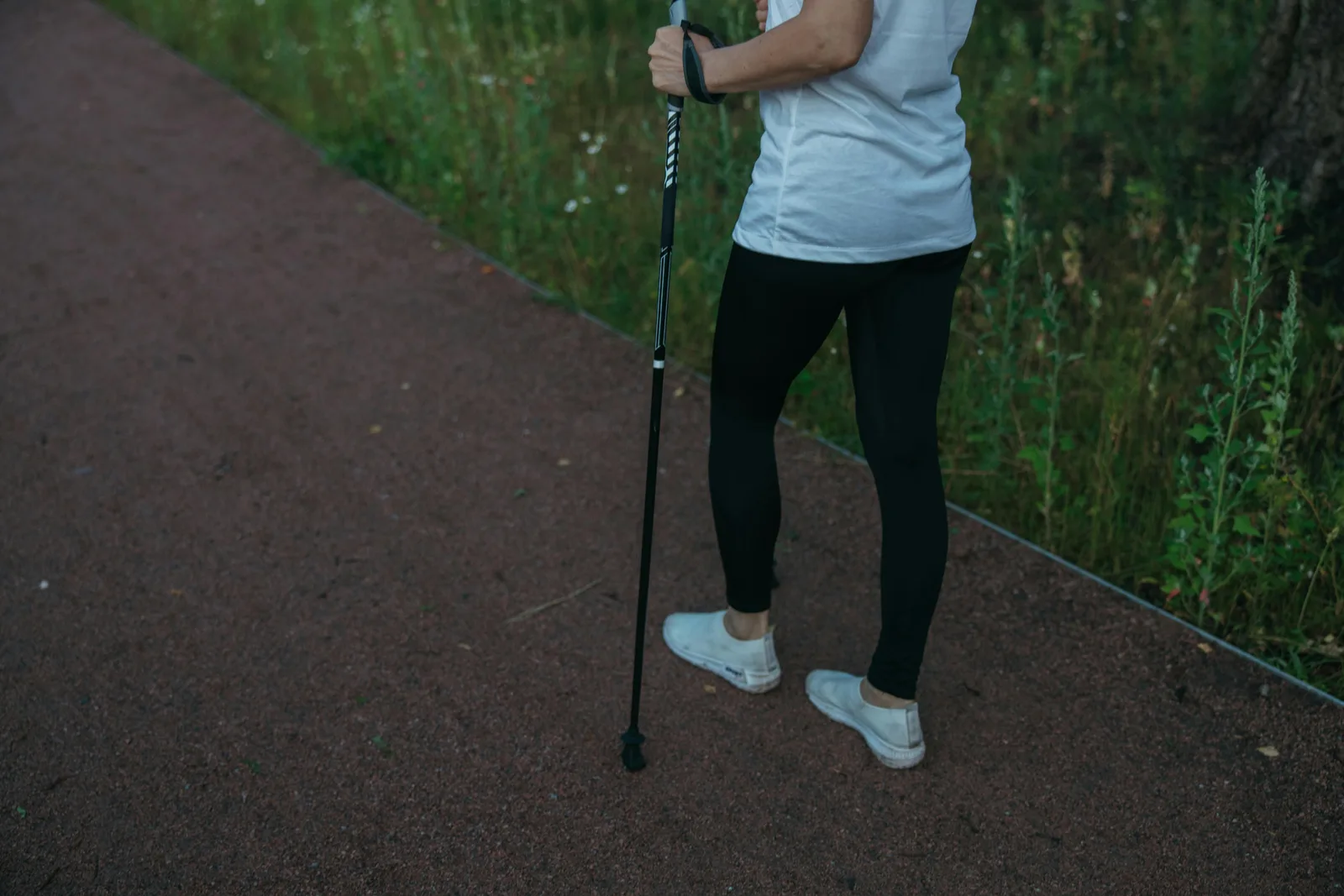
- Zero injury burden relative to running or cycling. Highest-compliance cardio.
- Meaningful mitochondrial work at Zone-1 to low-Zone-2 intensity. Builds capillary density over years.
- NEAT (non-exercise activity thermogenesis) is the largest daily TDEE lever most diets ignore. Spontaneous activity drops with aggressive caloric restriction, explaining many weight-loss plateaus.
- Post-meal glucose control: 10-15 min walk within 30 min of eating reduces postprandial peaks 10-30 mg/dL in small trials. Cheapest metabolic intervention available.
How do you structure a daily walking protocol?
| Phase | Dose | Frequency | Notes |
|---|---|---|---|
| Baseline longevity | 7,000-8,000 steps/day | daily | Captures most of the Paluch 2022 mortality benefit |
| Fat-loss NEAT | 10,000+ steps/day | daily | Adds ~300-400 kcal/day vs 5,000-step baseline |
| Post-meal walk | 10-15 min | within 30 min of each main meal | Blunts glucose peaks; no other intervention does this for free |
| Training-day active recovery | 20-30 min easy walk | on rest days or post-lift | Helps clear DOMS, maintains movement |
| Incline walking (ruck) | 20-40 min at 5-10° incline | 2-3x/week | Low-injury substitute for running; raises VO2 max load without impact |
Practical implementation
Measure honestly. Phone counts are 5-15% inaccurate vs wrist or dedicated pedometer. Don't obsess about precision; look at trends week-over-week.
Stack with other things. Walking podcasts, phone calls, audiobook chapters. The friction that keeps people from walking is usually boredom, not physical constraint.
Break it up. 3 × 20-min walks beat 1 × 60-min walk for glucose control and adherence. The mortality data is on total daily steps; the mechanism doesn't care if it's contiguous.
The treadmill desk case. For knowledge workers, slow-pace (1.5-2 mph) walking desks add 3,000-5,000 steps/day passively. Aggregated over a year, that's 1-2 million additional steps of mortality-associated movement.
What walking doesn't replace
Walking alone does not:
- Substitute for resistance training (sarcopenia risk, bone density).
- Substitute for higher-intensity cardio (VO2 max ceiling requires harder work than walking).
- Replace a Zone-2 session in duration or intensity; walking is typically Zone-1.
Walking is the floor of cardio health, not the whole building. See Zone-2 and VO2 Max for the rest.
Counter-view
Peter Attia argues zone-2 specific cardio (45-60 min at HR 120-140) is required for mitochondrial density in a way that walking doesn't replicate; the evidence supports this for elite athletes but over-specifies for general healthspan. Michael Joyner argues the mortality benefit of walking plateaus faster than the data show, based on age-adjusted subgroup effects; defensible but conservative.