
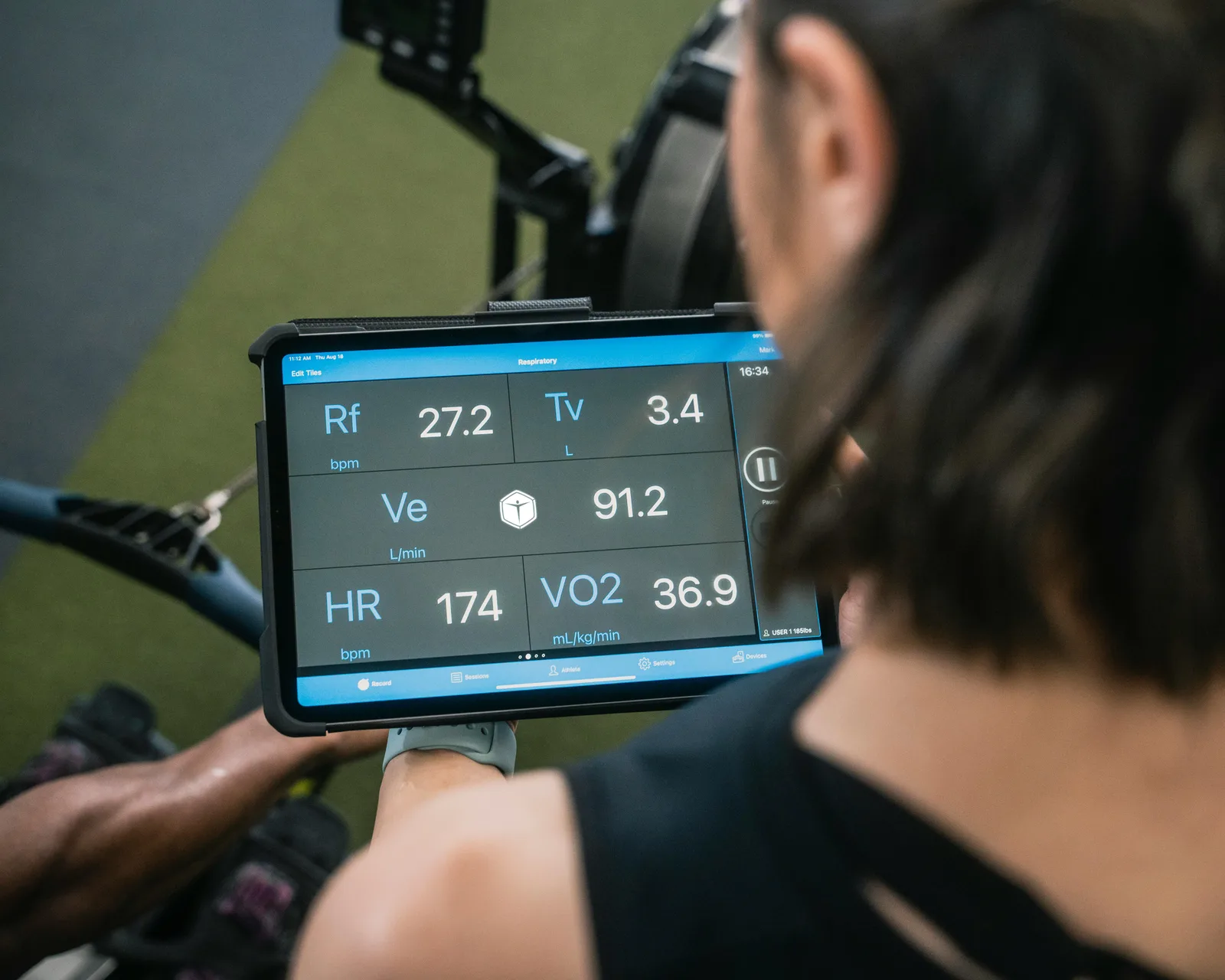
If you only had time for two fitness metrics, they would be these. Zone-2 capacity tracks mitochondrial efficiency at low intensity; VO2 max tracks the ceiling of oxygen utilization at maximal effort. Together, they predict cardiovascular and all-cause mortality more reliably than weight, cholesterol, or any single supplement.
Why do Zone-2 and VO2 max predict mortality so strongly?

Mandsager et al. 2018 (n=122,007, JAMA Network Open) followed patients who underwent standardized treadmill testing. Each 1-MET higher CRF associated with ~11% lower all-cause mortality over ~8 years of follow-up ( Mandsager et al. 2018, n=122007 ). Going from "below average" CRF to "above average" CRF reduced mortality hazard by roughly 50% or more. The dose-response continued into elite fitness bands; there was no ceiling in the data.
This is the largest single-modifier of mortality in asymptomatic adults that medicine has measured. No pharmaceutical class approaches it.
Morton 2018 meta-analysis on resistance-training adaptations frames the complementary strength-training case: cardio wins on CRF, resistance wins on sarcopenia defense, both matter past 40 ( Morton et al. 2017, n=1863 ).
How do you structure a weekly cardio plan?
Zone-2. Operationally, 45-90 minutes at a heart rate where you can hold a conversation but wouldn't want to. For most untrained adults that's 65-75% of max HR, or a blood lactate of roughly 1.7-2 mmol/L if you measure. You build capillary density, mitochondrial biogenesis, and fat oxidation this way. The classic prescription is 3-4 sessions/week of 45-60 minutes.
VO2 max. Operationally, short high-intensity intervals at or near your maximal aerobic effort. The 4x4 protocol (4 minutes at ~90% HRmax, 3 minutes active recovery, repeated 4 times) is the most-studied format. 1-2 sessions/week is enough for most; more than that is a recipe for burnout.
| Phase | Dose | Frequency | Notes |
|---|---|---|---|
| Zone-2 | 45-60 min, 65-75% HRmax | 3-4x/week | Conversational pace. Cycling, rowing, incline walk all work. |
| VO2 max | 4x4 intervals (~90% HRmax) | 1x/week at start, 1-2x at intermediate | Same day as resistance ok if separate sessions. |
| Resistance | Full-body 45-60 min | 2-3x/week | Not this article's focus; see the resistance training piece. |
Why do most people not need Attia's full cardio prescription?
Peter Attia advocates 4 Zone-2 sessions + 1-2 VO2 max sessions + 3 resistance sessions per week. That's 7-9 training days packed into a 7-day week, because Zone-2 and resistance can share days. It's the right prescription for people who have already done a decade of structured training and have the recovery capacity to absorb it. Most readers aren't those people. Start with 3 Zone-2 + 1 VO2 max + 2 resistance and add volume only when recovery markers (HRV, sleep, soreness) stay stable.
How to find your zone without a lab
The talk test is the most reliable field tool: if you can speak a full sentence without breathing mid-sentence but can't sing comfortably, you're in Zone-2. If you measure lactate, 1.7-2 mmol/L is the reliable band. HR-based zones derived from 220-age are off by 10+ bpm in a meaningful minority of people; use a field max HR test (e.g., after a proper warm-up, hold the highest 1 minute on a steep hill) for a better reference.
The counter-view
Benjamin Levine (pioneer of Masters athletes' fitness research) argues the 3x weekly resistance component is more important than most cardio-heavy prescriptions acknowledge, especially past age 55. Martin Gibala's HIIT-heavy camp argues that short, intense intervals deliver most of the cardiometabolic benefit with a fraction of the time commitment. The empirical resolution: both are right for different goals. Zone-2 is best for mitochondrial density and long-duration fuel efficiency; HIIT is best for VO2 max gains per unit time. Do both.